


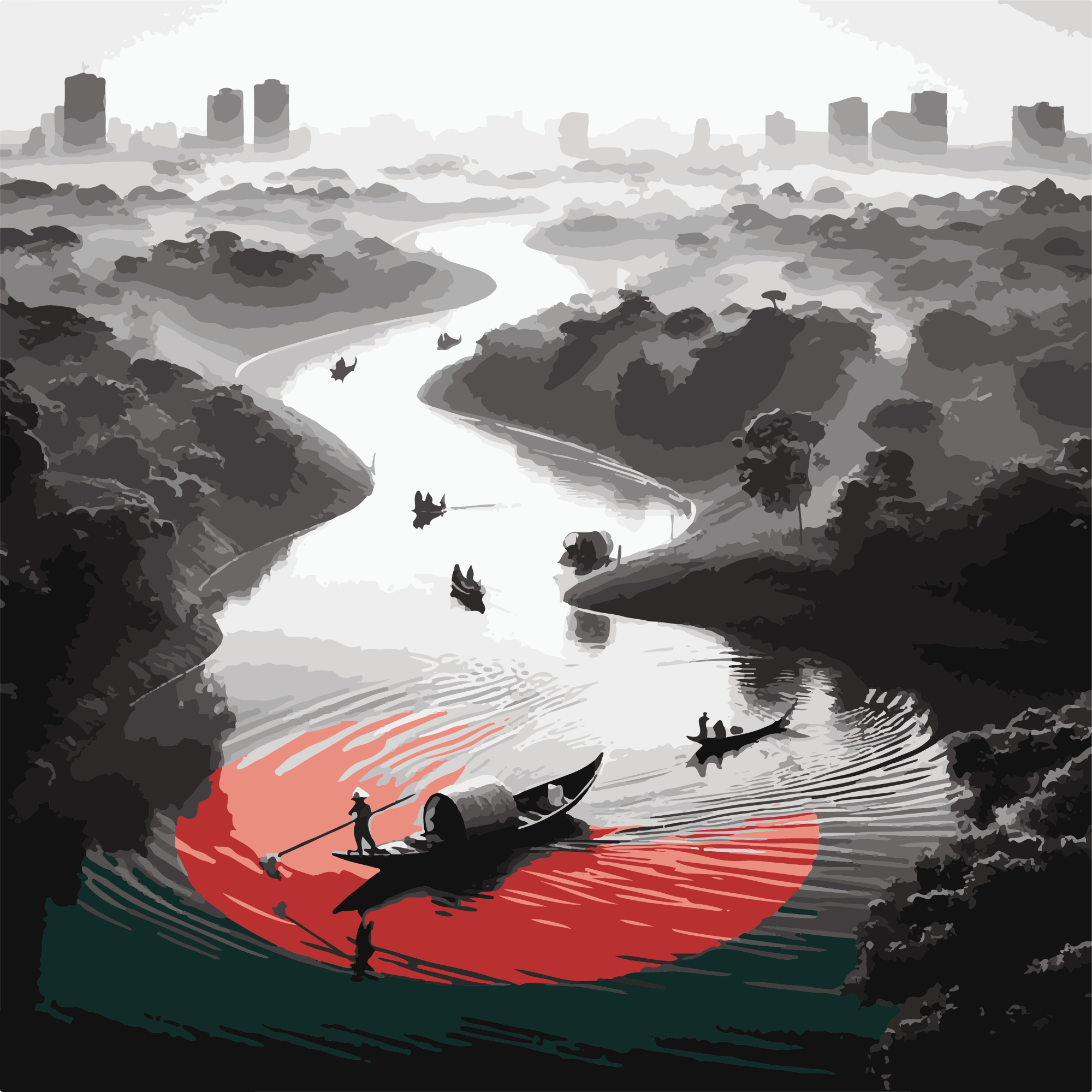
Featured Artwork
Waterway Harmony of Bangladesh
Artwork by Kazi Arifin Jamil
Empowering Planetary Stewardship to reconfigure and reimagine development for a just and welfare-based society
In Bangladesh, the paradigm of inequality and injustice exists not only in the material domain in terms of natural resource extractivism but in the scientific, cultural, and political domains. The development discourse of Bangladesh has embedded exploitative economic structures that devastated local ecology and displaced the native skills, capacity, and knowledge.
The erasure of the memory of the native knowledge and practices and the loss of consciousness of the ecological abundance of the land and water of Bangladesh have enabled a policy and development intervention regime that has strongly favoured the social elites, political establishment, and the chain of actors in exploitative global trade.
The majority population is displaced and dispossessed of their land, water, and ancestral professions, and are replaced by industrial agriculture, polluting industries, and sweatshops. These majority populations were the planetary stewards, who nurtured our lands and water to establish the historic abundance of Bengal.
“By empowering Planetary Stewardship, we can reconfigure and reimagine development for a just and welfare-based society.”
Our Theory of Change
Our framework illustrates how consciousness, capacity, and collective action interact to cultivate planetary stewardship and create pathways toward a more just, equitable, and resilient future.
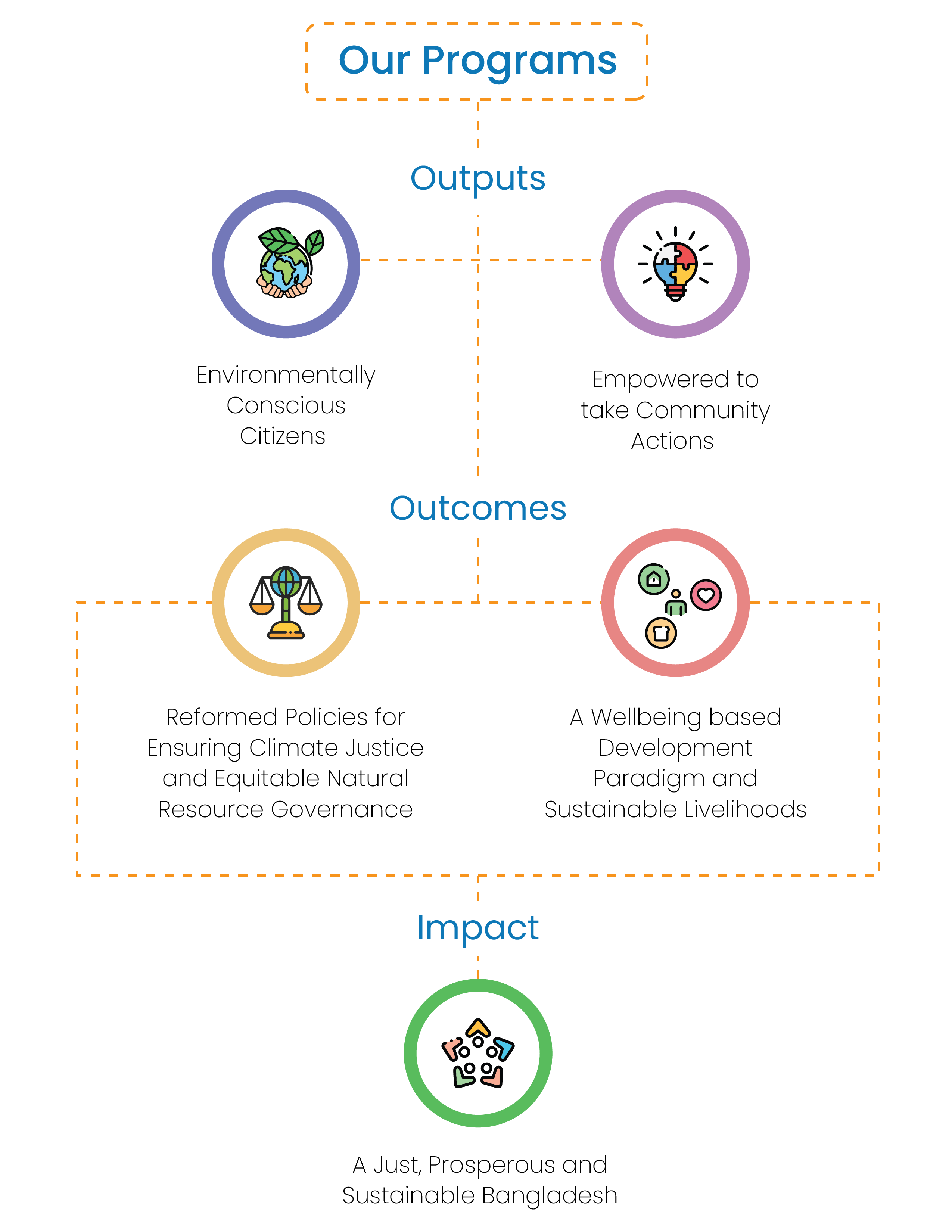
Three Pillars of Our Approach

Consciousness
Nurturing a critical inquiry of development discourse, we foster a deeper consciousness of the structural and cultural injustices that dehumanize, dispossess, and devastate the victims of climate change and ecological degradation along social, racial, and economic hierarchies.

Capacity
Empowering the agency of the youth to build political community and practical solidarities that establish reparative relations, restore humanity, sustainable livelihoods, and dismantle imperial structures of knowledge and material production that normalize injustice.

Community Actions
Cultivate the indigenous knowledge, relationships, and practices that have shaped the harmony between the earth and the human society to reshape cultural, social, and political discourse on development.